Translate

Tuesday, 14 May 2013


   Architectural model making is an enjoyable although at times a frustrating task. Working to scale is simple maths but working accurately on a small scale can be very time consuming.
   The first stage in the process is to obtain as much referencing material about the subject as possible. First we need to know what we are working with and what the finished model needs to contain.
   I would always seek to study existing plans and photos, perhaps visit the site if possible. Talk to the client about their expectations and understand their vision.
   The next stage is equating all the true measurements in to the scale that will be used. For instance if we are making a 1:50 model all the measurements must be divided by 50. But we must make sure the original dimensions are in the same format. If I am working form old plans I may have to change inches in to centimeters, or simply centimeters to millimeters. Once this has been done I can move on to selecting the materials I will use. This tends to be determined by the scale being used. A large scale model can use thicker foam board whereas a very small model may restrict me to using thinner cardboard or mount board where the smaller detail demanded can be constructed more easily and delicate detail can be represented more accurately.

   I have made models out of cardboard, incorporated plasticine and painted some. Architectural models are often produced from a plain white material such as card or as in my latest model fibre board. Fibre board has proven to be an easy material to use. Malleable but strong fibreboard is an excellent medium. Whereas white card is good it is difficult to represent the thickness of walls, say for instance the difference between an exterior wall and interior wall. But because fibre board is available is 3mm, 5mm and 10mm thicknesses it is possible to accurately show this in a model. Also when constructing staircases I have found it is easier to build to a correct scale with fibre board. There are a few things to remember when using fibre board. Firstly you must use a foam friendly glue and secondly you must always use a very sharp cutting blade or the foam in the board will pull with the resulting end profile perhaps not being as clean cut as you may have wanted. Try to keep you knife upright so you cut is square and be patient!


A few basic tools

   I always spend quite a lot of time understanding how best to approach the models construction. What to make first? Making a model is not the same approach as actual  building in real life. I don’t make the foundations first. Often some of the last pieces to be made and fitted is the flooring a complete opposite to building a real house where one of the first things you might expect to see is the outline floor plan. I often make individual components and then bring them together to make up the model as a whole.
   It takes time but models are satisfying to complete. Here are a few photos of the National Picture Theatre model I have just made.


   After many hours cutting and sticking I finally finished it.


I hope my model can add to the interest in the National Picture Theatre and it can help towards the rejuvenation of a unique site.


   It’s been a busy year. A lot learnt and much more to learn, but what can I take forward form this last year?
   I must be honest this year has seen moments of anguish but it I have got through it. There have been times when the towel was almost thrown in. I almost admitted “that’s near enough” on projects, but I could and ultimately did produce better work.
   Over the last year I have improved my competence using Sketch Up and Photoshop to a more professional level. I feel I have worked hard to improve my standards.
   I enjoy all creative activities but I have begun to recognise a particular passion for architecture and interior design. It is here I feel most able to express my ideas and bring to life the thoughts and images in my mind. Maybe it’s the blank canvas offering me the freedom to express myself that appeals. Perhaps it is the challenge or could it just be my forte. I will be happy anywhere I can push forward my creativeness, but reflecting on my work does suggest a slant towards these genres.
   Moving in to my final year I need to improve my professionalism and truly understand my strengths and weaknesses. Although some might be impressed with a little of my work I remain my fiercest critic and there is always room for improvement. When my degree finally arrives I desperately want to feel I deserve it and hope my portfolio will reflect that I do. Ultimately it is up to me and I am more than willing to put in the work to achieve my goal.
   Over the next year I hope to raise my profile wherever possible. Opportunity rarely just knocks on your door you must seek it out and this remains my intention. 
   Lastly I found a little quote by the person I was named after (so my Mum tells me)  D.H.Lawrence who and I thought I would share it. I totally agree with his sentiment.

Monday, 22 April 2013

Designers can't just think about themselves!


   When I produce a design at work I have many people to think about. Firstly the client, will they understand the design and recognise any benefits within it. Drawings for a client proposal may differ greatly from the drawings I produce for manufacture. A design for a client may have rendered images showing a more realistic view of the finished product. I may only include overall dimensions of the design. Descriptive comment within the drawing maybe more explanatory of the design. A client proposal must be clear and will be visually much different from the more technical drawings produced for manufacture. 

   Once a design has been signed off by a client another set of drawings is needed for manufacture. While rendered images look great they do not hold the correct information for our factory to make a component. There are several different people along the line of production and I must think about their individual processes and make sure the relevant information they will need is clear.

   Often the first process is the laser cutting of the flat part profiles from a sheet of material. For our laser operators I need to mark the material on stock to be used in manufacture. If there is any etching I must point this out. If the material is sensitive to poor handling I must make sure they are aware of this. They will also require the material specification. We work with various grades of steel and alloys; 403,304 and 316 stainless steel.  6082 and 1050 aluminium. CR4, S275 and S355 steel. This information must be clearly described on production drawings or the incorrect material may be used making for a costly mistake. De-burring requirements must be clearly stated and on the actual Laser nest we make sure the operators are aware of any changes to what we recognise as a standard nest. For instance we normally work with a 10mm minimum border around the edge of sheet steel. This can be reduced to 1mm but the laser must be switched to accurate sheet edge detection. The laser will take longer to initiate but as you might have guessed is more accurate on initial sheet recognition and we can squeeze an extra part on. If this is not pointed out it could lead to loss of parts.

    The second group of people I may have to consider when producing drawings are the press brake operators. Do my drawings have all the dimensions they need? Fold line dimensions and bend extents. Overall dimensions and information on the bend radius used so they can match this with tooling in order to produce the piece correctly. Which side is the good side and any relevant tolerances they are required to work to.

   The third set is the fabricators. Here I must detail any welding criteria. If it’s a stitch weld how long are the stitches and at what interval. Maybe the unit needs to be gas tight, maybe no welds are to be visible from one side. Should the fabricator use TIG welding or will a faster MIG weld be sufficient. Again what tolerances are they to work too? Can we laser etch any components to make construction easier?  Will the fabricator require a separate JIG to be made for a job? Are there any holes to be tapped out? If so what thread and to what depth?  Countersinking all these details must be clear or the fabricators will come knocking on the design office door. If in doubt as a designer ask the fabricator. It is easy to draw on 3D programs but it can be much more difficult or even impossible to actually make the component the way it has been designed.
  
  The fourth group are the powder coating people. Colour requirements need to be included, if a specific RAL colour is to be used this needs to be clear along with the finish, satin or gloss. Smooth or textured. Are there any holes or threads that need to be masked up prior to coating? Once coated, should the product be wrapped or palletised for delivery?

   In my design role I feel it is necessary to understand manufacturing processes. If a design is created in a way that streamlines these processes it already has an edge on cost. Working in design is challenging but very rewarding. I have many people to consider whilst carrying out my daily duties, but the more I consider them the more respect I earn and the smoother a job will run. My goals with each contract completed are a satisfied customer and a happy workforce and with careful consideration of all the parties involved this can be achieved.


Thursday, 11 April 2013

Monochrome


   Black and white, dark and bright using shades and stark contrast monochrome can offer some interesting results. 
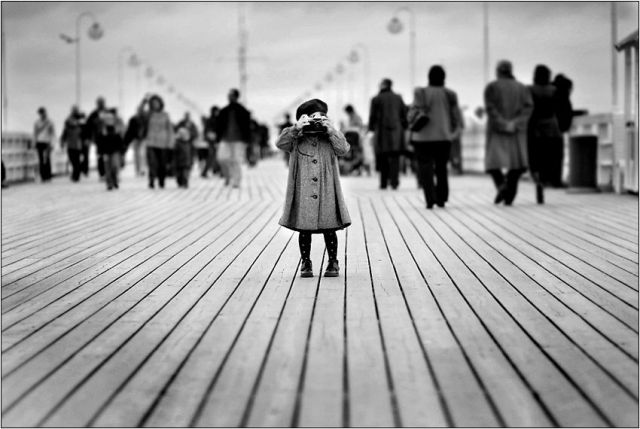
   Today it is possible to apply filters to digital photographs and choose if we would like an image in colour, black and white or monochrome.  But this is only a recent development. All images were black and white not so long ago. At times black and white fits perfectly. This photo of a child taking a photo of the person taking her photo is a great example. Complemented by perfect focus length the image draws in your attention. Questions arise, was it taken a long time ago? Shes not holding a modern digital camera but I think the woman's handbag in the background isn't from the early 1900's either. The little girl is dressed classically, a hoody would give the game away. Even the decking and location, a pier hints at Victorianism perhaps. Clever use of monochrome can evoke a sense of age within images.


   Sometimes in design the contrast available when using a monochrome scheme will be intentional. Often kitchens and bathrooms are a popular choice.


   Irregular shapes work well in this shop interior alongside the monochrome scheme. It puts emphasis on the shapes and nicely divides the area up. The bright lights add to the contrast. The clothing is hung, light clothes on black, dark on white making them stand out against the two backgrounds.


   This photo of trees in snowy surroundings is naturally monochrome, but in ways has visual similarities to the shop image above. The monochrome shop creates an avenue of cloths much like the trees focusing our attention deep into the image. In both we are undistracted by colour.

   Although most of us perhaps would assume monochrome means simply back and white or greyscale. Monochrome can be an image made of a single colour or shades of a single colour.


   Producing work in a monochromatic format under the right circumstances can amplify the impact of the piece and is always worth considering. 
   The model I mentioned in my blog will be monochromatic, it will be all white. For an architectural model this works well because it provides a blank canvas for inspiration. If I made the model with colour I think it could hinder creative thoughts and design suggestions. Instead of looking at a blank canvas you would see all the decay and litter. The vandalism on the site, over grown trees and damp conditions. If you looked at a model with all this detail the creative ideas you are seeking for the project would be swamped by the visual impact of a semi derelict site. 
   Using monochrome can be visually stark, but it can be attention grabbing and purposeful use of monochrome can simplify some work and images if that is the goal.


Black and white image of girl with camera[online image] Available at<:http://img.izismile.com/img/img2/20090916/black_and_white_photographs_22.jpg> [Accessed April11 2013]
Black and white bathroom image [online image] Available at<:http://www.sigmaenterijeri.rs/img/proizvodi/kupatilski%20namestaj/11.jpg> [Accessed April 10 2013]
Black and white shop interior image [online image] Available at<:http://www.designmena.com/wp-content/uploads/2013/03/CM8015668@cartel38-600x400.jpg>[Accessed April 10 2013]
Black and white tree image [online image] Available at<:http://www.canvas101.co.uk/images/gallery-art/Photographer/Sunny%20Kalsi/SK0010%20black%20and%20white%20trees%20f.jpg>[Accessed April 10 2013]
Pink Monochrome image [online image]Available at<:http://www.bigblackpig.com/painting/monochrome2.jpg>[Accessed April 10 2013]


Tuesday, 9 April 2013

Model Making

   For one of my projects I am making an architectural scale model of the National Picture Theatre in Hull, England. For this I need a few things.
   I have gathered and been given plans, drawings, photos, sketch up models and more.  Details on how the building/ruin stands today and how it originally looked. 


Present day frontage
Inside today


 The Theatre today looks very different to its heyday and has been slowly crumbling with the passing years. This may soon change as plans are afoot to renovate the Theatre. A memorial garden, an education centre, exhibitions and displays about Hull and its wartime history. There are many ideas being floated.
  
  The Theatre suffered damage still visible today on the night of March 17/18 1941. At around 10pm the air raid warnings sounded. The audience, who had been watching  Charlie Chaplins " The Great Dictator " of all films! quickly took shelter and when a bomb hit the Theatre everyone escaped unharmed. The Theatre however suffered heavy damage and was never to be repaired. The owner simply built a new one further down the road. 
Original Theatre Plans.
A useful sketch for making a model showing the surrounding buildings
     I have detailed information of the site as it was and is now. So a scale model will be easy right?
    I am going to construct the model using foam board. A foam core product with smooth white paper on each side. It's rigid and comes in 3mm 5mm or 10mm thicknesses. Great for model building and not over priced. I am going to use 5mm for my model. 

   I will also need a very sharp knife, a steel ruler, scale ruler and some foam glue. I intend to make an aluminium base for the model at work and will have it powder coated RAL 9003 Signal White. I will also make a little laser cut plaque with the building information, scale details and I might just sneak my name on the corner too!
Foam Board
   So all I need now is patience and persistence and it should come together nicely. I will post some interim images of construction so pop back when you have a few mins to see how its going. 
   In the meantime if you would like some more information on the National Picture Theatre in Hull please go to http://www.ncww2mt.freewebspace.com/ 


   National Picture Theatre Frontage Image [online image]Available at:<http://www.arthurlloyd.co.uk/Hull/NationalPictureTheatreHull2011/NationalPictureTheatreHull1.jpg> [Accessed April 9 2013]

National Picture Theatre Interior Image[online image]Available at:<http://i.thisis.co.uk/275561/gallery/images/3341168/2001110.jpg>
[Accessed April 9 2013]

Foam Board Image[online image]Available at<:http://www.artdiscount.co.uk/images/product/white_foam_board1258362837_1121317985054_407.jpg>[Accessed April 9 2013]

All other images sourced from existing project information.

Sunday, 17 March 2013

Texture

   As a designer there will be times when I must consider texture. In many genres of design texture may need to be carefully chosen. Perhaps none more so than  Clothing and Fashion Design. I remember uncomfortable itchy scratchy sports wear at school, seemingly made from recycled sandpaper. I would never buy clothing like that again once I could choose my own. One of the most comfortable shirts I have ever had was one made from a very soft heavy cotton. A natural material that felt great to wear. Perhaps more expensive than recycled sandpaper, but the frequency of use easily outweighed the extra purchase cost.
   Furniture and Interior Designers will also think about texture. I wouldn't want a suite made out of itchy scratchy stuff.  I would much rather sit on the floor. Textured wallpapers on feature walls are popular but some textured finishes have fallen out of favour. Artex ceilings seem to be a thing of the past and thankfully wood chip wall paper is no longer popular.
   But what about other things with texture designed into them? My son has a book that cleverly uses textures to help describe the story. I can remember it was a favourite of his for some time. I also recall how quickly he remembered the new story. He liked the sort material on the teddy bear best of all. This demonstrates how we quickly connect emotions to texture at a young age, or perhaps how powerful teddy bears really are!
  Texture has aesthetic design  qualities and can have an emotional impact on us but texture also has  practical uses too.  Anti-slip floor coverings are a good example of how a practical application of texture can be used within a design project. The image below uses at least two forms of texture, and I suspect there maybe three. The first and more obvious one is the raised circular pattern. This would allows liquids to drain without entirely covering the flooring. Secondly the raised sections have a textured finish which will offer a better level of grip. Lastly the speckles are likely to be made from a more wear resistant material and could provide even more grip.

Anti-slip floor covering
   Texture can be used to give the impression of or convey quality. It can be used to improve safety and it can alter our emotional state. Considering textures in design is very important and many clever uses of texture can be found in our daily lives.

 
   Anti-slip flooring[online image]Available at:<http://img.archiexpo.com/images_ae/photo-g/anti-slip-pvc-flooring-64569-2093471.jpg> [Accessed March 17 2013]

Saturday, 9 March 2013

Display

  Definition: to arrange something or a collection of things so that they can be seen by the public.

   So you want to be a show off? 

   A great display will draw people in. A great display can hold someones attention even if they have no interest in what is on display and it has no relevance to them. This shows how powerful displays can be. We are drawn to them reflecting the skill and inventiveness of display designers, the people that build them and the people that staff them and bring them to life.
   A successful display has so many components to be considered I am sure I will miss a few. Perhaps you can leave me a comment if there are any you could add. What follows is how my mind runs over a basic checklist of what needs to be established early on when planning a display.
   Firstly and obviously who is our client and what is to be displayed? Have they got any thoughts or ideas? After all they should understand what will be on display better than anyone. This will help if an established brand or image exists. But even if the client wants a completely new image or brand promoting which is perhaps more creatively demanding, a thorough understanding of your customer will help. We must understand the product to be displayed and then the target audience.
   Moving on to design questions, what are we displaying? A single item or multiple. Available footprint for the display. Object size relevant to the overall display size. Should it be elevated or at ground level? Is there a colour theme to consider. Perhaps a style already promoted and known to the brand, relevant music, perhaps smell. What will the context be? Will the display be used in daylight or darkness and what about lighting. Will it be interactive. Will the display be motionless or have moving elements. Perhaps performers or a narrator. The use of multimedia in modern displays of all types is becoming a cornerstone in their design.
   The design phase would present new questions depending on what we are displaying. Will access to the intended venue or venues be an issue if the display is large. How will it be transported, safely erected and taken down. If the display has valuable items within it are there any security issues to consider. How close will the viewing public be allowed? Can they touch the display and interact with the merchandise or must it be kept at arms length and protected. 
   I would have some infrastructure questions. The electrical demand the display may have and how it will be supplied. Water if needed, amenities and overall site security. Risk assessments, insurance and any relevant health and safely requirements cannot be avoided. Local authority permission or any planning regulations or permissions needed must be granted. The list goes on! Many more obstacles may need to be overcome, but by asking the right questions and carefully planning your design, great displays are born.


    This display captured my attention. It features many recognisable things from the game series it is promoting. Life size characters and props that blend in to a large backdrop filled with images and graphics. It is interactive with gaming stations positioned around it, I like the way the screen mountings have been incorporated into the overall design theme. the floor covering and lighting have been considered and I'm sure there will have been audio or music of some description. I would have spent a few minutes just admiring the design qualities of this stand before indulging in its offerings.


Borderlands Show Stand[online image]Available at:<http://www.freddiegeorges.com/wp-content/uploads/2012/05/slider_2kg_pax2012.jpg> [Accessed March 9 2013]
The author would like to acknowledge that certain citation and reference examples were taken from the following publication
Cambridge Dictionaries Online[online]Available at:<http://dictionary.cambridge.org/dictionary/british/context_1?q=context> [Accessed March 9 2013]


Monday, 4 March 2013

Construction & Sustainability


   My last post on materials is perhaps relevant to this one. Metal has pushed forward our construction techniques and what is achievable, but is it sustainable?
   I suppose you must decide on what is sustainable. In a sense all buildings add to ongoing sustainability as they can be demolished releasing the land. Many of the raw materials can be used again, old bricks crushed to make modern lightweight blocks. Timber can be chipped and used in chipboard and MDF. 
   But to me sustainability is more than just reusing and building with efficient materials and techniques, it is building something to last in the first instance.


   A modern skyscraper has a life expectancy of 75-100.  I read the modern home is built with the expectation of lasting 50 years, yet we have the ability to build homes and buildings to last many generations. They could be supremely insulated and packed with eco-friendly devices and systems. A house that could be handed down generation to generation and perhaps paid for over generations making any added costs affordable. But if you where a house builder would you want that? I know white goods have a life-span factored in to them, the producers want you to buy new units on a regular basis. So why not houses too. 50 years is a slow turnover but it's better than hundreds of years. That's one factor, another is the quality of many things in today's world and in my view the lack of craftsmanship.
   So I am a big fan of quality and things that last. But all too often profit and shoddy workmanship interferes with my expectations leaving me feeling a little ripped off. I appreciate everyone needs a profit but I believe if you offer a quality product that may well last decades or generations you are not only securing a lifelong customer, but a lifelong advert for your products and services. That is surely priceless. I hope that within my designs I will be able to reflect my beliefs.
   Construction has changed greatly over the last few generations and we are now able to build structures unimaginable in days gone by. Precision engineering has moved forward leaps and bounds with many vast buildings constructed with tolerances of just millimeters. Materials are calculated accurately and on the whole the modern construction site if a safe place to work.All good news.
   A still growing sector of construction is the reuse of buildings. Alteration and conversion to either offices or dwellings has seen some very creative uses and some in exceptional locations on many differing scales.
   One big project I have been examining with interest is the rejuvenation of Battersea power station in Central London that was built throughout the early 1930's and completed in 1937. Positioned in a prime location on the banks of the River Thames at it's peak Battersea provided 1/5 of the electricity used in London. Equivalent to half the output of a modern nuclear power station. But could you ever see a modern power station of any kind turned into offices, shops and homes? Perhaps it's modern efficient design or the cost pressures of modern construction, but i cannot help thinking our predecessors tried harder with the finishing touches whatever size of project they undertook. Please check out the Battersea Power Station website to read up on current plans. It is an immense project and when completed will look amazing and it will still include one of our most iconic buildings when it might have been much easier to knock it down and start over.

Battersea Power Station
Image references:

Block image[online image]Available at:>http://www.rwdl.com/site/wp-content/uploads/2011/07/100mm-Solid-Block.jpg>[Accessed February 28 2013]
Battersea Power Station[online image]Available at:http://www.hsmith.co.uk/assets/images/battersea%20industrial.jpg>[Accessed March 04 2013]


Wednesday, 27 February 2013

Materials

   I work with steel and alloys of all types: hot rolled steel, zintec, aluminium, stainless steel and brass. Many grades and finishes are available and we work with them all. As materials metals are incredible, being both versatile and durable. Able to withstand extremes of stress and temperature. If we had no metal there would be so many less things in the world and we would tumble back a thousand years.
  If we had never discovered different metals and how to make them, we would not have been able to create the tools of modern war that have devastated so many. the flip side would much reduced agriculture without modern machinery leading to famine and disease. They are two extreme aspects of the impact metal has had on modern man. I'll leave you to make up your own mind which you would prefer. 
  As materials metals and alloys have made one of the largest impacts on the modern world. This will continue until we have used up all the raw natural elements we blend to create them. Then we will go back to the only one that will matter, GOLD. But as with so many things, when it comes to the best it is nature that produces it and she takes her time too.


A gold nugget that is sadly not mine.
Answer me these questions, would you prefer....


Nylon or silk?
Plastic or Wood? 


We still have a lot of work to do then!

I am not suggesting all man made materials are useless or of no worth far from it.But for all our trying we are still drawn to natural materials. 


Image references:
Gold Nugget Photo[online image]Available at:>http://biggeststuff.com/wp-content/uploads/2013/01/gold-nugget.jpg>[Accessed February 27 2013]

Nylon Photo[online image]Available 
at:>http://i00.i.aliimg.com/img/pb/514/789/540/540789514_638.jpg>[Accessed February 27 2013]

Silk Photo[online image]Available at:>http://i633.photobucket.com/albums/uu57/fashion909/Ablaze%20Linen/Gold_Satin_silk_sheet0.jpg>[Accessed February 27 2013]

Plastic chairs photo[online image]Available at:>http://mike.witso.net/dc-671.jpeg>[Accessed February 27 2013]
Wood chairs photo[online image]Available at:>http://www.freewtc.com/images/products/engraved_imperial_palace_genistin_chair_set_15_57997.jpg>[Accessed February 27 2013]


Colour

R

     Colour can have a profound effect on the way I feel and often moves me to physical reactions.
A red Ferrari will turn my head.
A blue sky will lift my spirits.

The flashing colours of a
Kingfisher capture my attention.
The burning bright yellow of the sun can force me to shield my eyes.
Pastel colours are soothing.
Bright colours bring a sense of fun.
   Colour plays a part in every day of my life. Most of the time I may not be aware of it, but it can affect my emotions. I cannot and would not want to change what colour means to me. Personally I love strong vivid colours most of all. A monochrome world would not be for me.


Image references:
RGB Colours image:[online image]Available at:>http://wpcontent.answcdn.com/wikipedia/commons/thumb/c/c2/AdditiveColor.svg/200px-AdditiveColor.svg.png>[Accessed February 27 2013]

Ferrari Photo[online image]Available at:>http://img.ihned.cz/attachment.php/980/36870980/iosu48F7GHIJLMOjlQWbefhpy1TwARVn/Poutaci_Ferrar_250_GTO.jpg>[Accessed February 27 2013]

Blue Sky Photo[online image]Available at:2<http://ssl.gstatic.com/android/market/com.oslwp.bluesky/hi-256-0-fe93e0e17c2ecfb4c63c9bb1591357afa251aba8>[Accessed February 27 2013]

Kingfisher photo[online image]Available at:<http://www.iesphotography.co.uk/blog/wp-content/uploads/2010/01/kingfisher.jpg>[Accessed February 27 2013]

Sun Photo[online image]Available at:>http://mysapl.files.wordpress.com/2012/06/sun1.jpg>[Accessed February 27 2013]

Pastel colours[online image]Available at:<http://fineartamerica.com/images-medium/beach-house--pastel-colours-i-hideaki-sakurai.jpg>[Accessed February 27 2013]
  
Bright cloth photo[online image]Available at:>https://blogger.googleusercontent.com/img/b/R29vZ2xl/AVvXsEgMBW9EaIf4Sm4L0QmrgtqfK9hQ4pFUeAAis8jEczsQyjwnRN4xNQyTV0upUQsAiEF8bJXfSvzHYT8RZ8p42z4yBBEthegGfMiQg7UhcLhpwTieLfJlrRRIYlEIXWJTvQ1v49S5zTIbqLkP/s1600/Simon+Caplan.jpg>[Accessed February 2013]